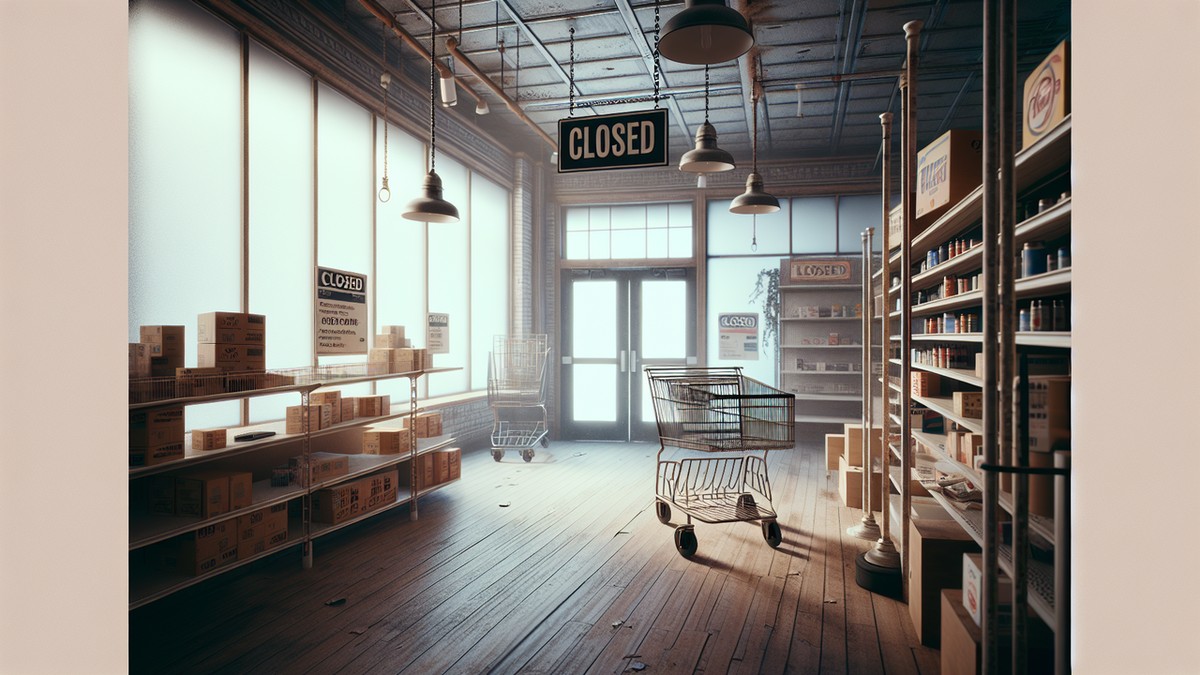
struckcreative.com – Across cities and suburbs, retail decline is reshaping how people shop, work, and spend leisure time. Storefronts that once buzzed with activity now face rising vacancies, shrinking foot traffic, and changing customer habits. Understanding this shift is essential for retailers, landlords, and even local governments trying to protect their economic base.
Retail decline is not just about empty stores. It signals deeper changes in consumer priorities, technology, and community life. When shops close, nearby businesses suffer, jobs vanish, and neighborhoods lose valuable gathering spaces. The ripple effect often extends far beyond a single failed store.
This article explores the main forces behind retail decline, the subtle signs it is accelerating, and the strategies that can slow or even reverse the trend. By reading the signals early, retailers can adjust their business models and discover new paths to sustainable growth.
How Retail Decline Began in the Digital Age
The earliest wave of modern retail decline emerged alongside the rapid rise of e‑commerce. Online platforms offered unmatched convenience, wider product ranges, and aggressive pricing, eroding the advantages of physical stores. Shoppers quickly learned they could compare prices and buy almost anything from their phones.
Large chain stores initially seemed resistant, but many relied heavily on outdated formats and slow decision-making. Their response to digital competition often came too late, allowing online-first brands to capture loyal customers. As margins thinned, investment in stores, staff training, and innovation declined.
Over time, this created a self-reinforcing cycle. Weak in-store experiences drove more customers online, which further tightened budgets and accelerated retail decline. The shift did not happen overnight, but its compound effect became impossible to ignore.
Changing Consumer Expectations and Retail Decline
Today’s shoppers expect seamless experiences across physical and digital channels. They want to research online, try in person, and purchase wherever it is easiest. Retailers that cannot deliver this flexibility lose relevance quickly. A simple transaction is no longer enough to draw people into a store.
Customers also now value time and personalization more than ever. Stores that feel generic or frustrating to navigate drive people away. When service is slow or staff seem untrained, visitors often decide not to return. Each lost visit gradually contributes to retail decline.
Brands that survive are those that understand local needs, curate products carefully, and provide human interaction that technology cannot fully replace. When shops become memorable destinations rather than mere outlets, they slow the downward spiral.
Technology Adoption Gaps Fueling Retail Decline
Many retailers underestimated how quickly digital tools would transform shopping behavior. While some embraced data-driven inventory systems and customer relationship tools, others clung to manual processes. This gap widened operational costs and reduced responsiveness to trends.
Consumers began to expect features like real-time stock checks, click-and-collect, and easy returns. Stores that lacked these capabilities appeared outdated and inconvenient. As competitors advanced, the performance gap deepened, reinforcing retail decline in slower-moving businesses.
Bridging this gap requires more than installing new software. It demands training, cultural change, and a willingness to test new ideas. Retailers who treat technology as a strategic asset rather than a burden are better positioned to win back shoppers.
Economic Pressures Behind Retail Decline
Beyond technology, macroeconomic forces have played a significant role in retail decline. Periods of wage stagnation, rising living costs, and economic uncertainty have pressured household budgets. Many people have cut non-essential purchases or delayed upgrades.
At the same time, commercial rents and operating expenses have climbed in prime locations. When sales soften, fixed costs quickly become unsustainable. This combination leaves stores with thin buffers during downturns, leading to closures.
Regions that rely heavily on a single industry often feel the strain first. When local employment weakens, discretionary spending falls, and retailers suffer. A diversified local economy is often a hidden defense against rapid retail contraction.
Visible Warning Signs That Retail Decline Is Accelerating
Retail decline rarely arrives as a single dramatic event. Instead, it appears through subtle trends that, over time, become impossible to miss. Recognizing these warning signs early allows brands and communities to respond before the situation becomes critical.
One of the clearest indicators is a sustained drop in store visitors, even during typical peak periods. Empty aisles in once-busy locations point to shifting habits or stronger competition. If promotional campaigns fail to lift numbers, deeper structural issues may be at play.
Another important signal is the growing gap between online and in-store performance. When digital sales rise while physical channels stagnate, retailers must reassess the purpose and design of their locations. Stores that ignore this imbalance risk further retail decline.
Store Closures and Vacant Units
Visible closures are the most obvious sign of retail decline, especially when several occur within the same area. For shoppers, boarded windows or “To Let” signs send a negative message about the health of a high street or mall. This perception alone can discourage visits.
Vacant units also hurt the remaining businesses by disrupting the natural flow of foot traffic. Visitors may feel less safe or less inclined to linger when many spaces are empty. The overall appeal of the location deteriorates faster than most owners anticipate.
Turning vacancies into short-term pop-ups, community spaces, or flexible work areas can soften the impact. These interim uses keep areas active and buy time while longer-term solutions are explored.
Discount Dependence and Margin Erosion
When retailers rely heavily on constant promotions to attract customers, it often reflects deeper problems. Endless discounts can train shoppers to wait for sales, damaging long-term profitability. This pattern is common in periods of severe retail decline.
As margins shrink, investment in staff, design, and innovation becomes harder to justify. The customer experience suffers, leading to further loss of loyalty. Over time, the brand may become associated only with low prices rather than value or quality.
Breaking this cycle requires a shift toward differentiated products, better storytelling, and improved service. When shoppers feel they receive something unique, they become less price-sensitive and more loyal.
Weak In-Store Engagement and Experience
A less obvious sign of retail decline is declining engagement inside the store itself. Customers may enter, browse briefly, and leave without asking questions or seeking advice. This silent disengagement can be more damaging than overt complaints.
Common causes include confusing layouts, poorly displayed merchandise, or a lack of knowledgeable staff. In an era where almost any product is a few clicks away, the store must offer a clear reason to stay. Without meaningful interaction, the visit feels forgettable.
Retailers who focus on storytelling, demonstrations, workshops, or events often see higher engagement. These experiences turn a simple visit into a social or educational outing, encouraging repeat traffic.
Strategies to Slow or Reverse Retail Decline
Although widespread, retail decline is not inevitable for every business. Many brands have successfully reinvented themselves by rethinking the role of their stores, embracing technology, and rebuilding trust with customers. Adaptation, not scale, is often the deciding factor.
One effective strategy is to reposition stores as part of a broader ecosystem rather than standalone sales points. When locations serve as showrooms, pickup hubs, service centers, and community venues, they stay relevant. This multipurpose approach helps balance online and offline strengths.
Another essential move is to dig deeply into customer data and feedback. Understanding who still visits, why they come, and what frustrates them provides a roadmap for change. The businesses that survive retail decline are those that listen closely and act quickly.
Reimagining Stores as Experience Hubs
To counter retail decline, many forward-thinking brands are transforming stores into experience hubs. Instead of focusing only on transactions, they emphasize discovery, learning, and social connection. This shift gives people a reason to visit beyond simple purchasing.
Examples include interactive product testing, in-store classes, or collaborations with local creators. These activities generate stories customers want to share, extending the reach of the brand. The store becomes a stage rather than just a shelf.
Such experiences need not be extravagant. Even small touches, such as comfortable seating or personalized styling sessions, can make visits feel special. The aim is to create value that online-only competitors cannot easily replicate.
Omnichannel Integration to Address Retail Decline
True omnichannel integration is one of the most powerful responses to retail decline. It allows customers to move smoothly between website, app, and store without friction. Stock visibility, pricing, and loyalty rewards should align across every touchpoint.
Services like click-and-collect, reserve-in-store, or ship-from-store turn physical locations into strategic assets. They shorten delivery times and encourage additional purchases when customers arrive. Stores effectively become both mini-warehouses and service centers.
When staff can access customer histories and preferences, they provide more relevant suggestions. This combination of digital insight and human interaction strengthens relationships and boosts overall satisfaction.
Community-Centered Retail and Local Partnerships
A growing number of retailers are fighting retail decline by reconnecting with their local communities. Rather than acting as anonymous chains, they host events, support neighborhood causes, and partner with nearby businesses. This local focus builds emotional loyalty that price alone cannot buy.
Examples include bookshops running reading circles, fashion stores hosting repair workshops, or grocers working with nearby farmers. These collaborations differentiate the store and keep it embedded in daily life. People feel they are supporting more than a transaction.
As communities gain a sense of shared ownership, they become more willing to advocate for the store’s survival. This support can make the difference between closure and renewal during challenging periods.
The Future Beyond Retail Decline
While headlines often focus on closures, the long-term story is more nuanced. Retail decline is pushing the industry to refine its purpose and sharpen its strengths. Those unable to adapt will disappear, but new concepts are already emerging in their place.
Hybrid models, where digital convenience meets curated physical experiences, are likely to dominate. Smaller, more flexible spaces may replace large, impersonal formats. Retailers who view their locations as living laboratories will be best placed to evolve.
Ultimately, retail decline is less about the end of shopping and more about transformation. People still enjoy discovering new products, connecting with others, and exploring local areas. The brands that align with these human needs will define the next era of commerce.